


Skip to content

Work · Content & Media · 2025

Enterprise AI deployment for a leading medical-aesthetics MCN

End-to-end content automation; account-matrix revenue 3M→5M RMB/mo

Starting point

The client is a leading domestic medical-aesthetics MCN group and its matrix of medical IP accounts, operating primarily across Xiaohongshu and Douyin. The matrix spans multiple medical personas, with an ongoing need to scale content output while maintaining persona consistency and driving commercial conversion.

The problem

  • Editorial work was inefficient and topic selection relied almost entirely on individual instinct, making viral hits unpredictable and hard to replicate — with the team's output hinging on a few key people.
  • Existing analytics stopped at surface metrics like follower counts and engagement rates, with no deep, content-level breakdown of structure, pacing, or delivery — so they could never answer why a given piece actually worked.
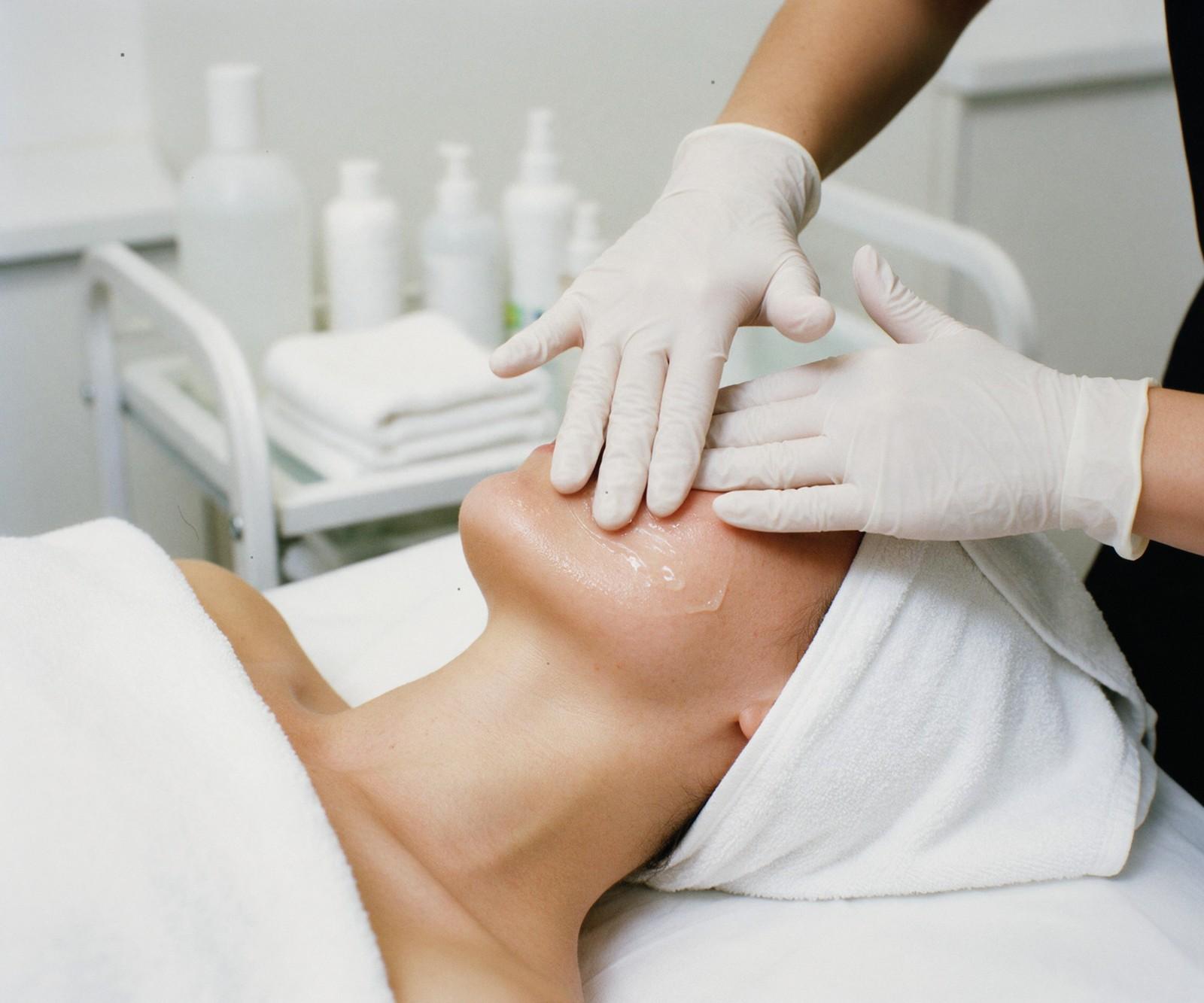
A facial treatment in a clinic

What we built

  1. 01We built a configuration hub (the Account Bible) that structures each account's persona, endorsements, and selling points into a single source of truth for all downstream content production.
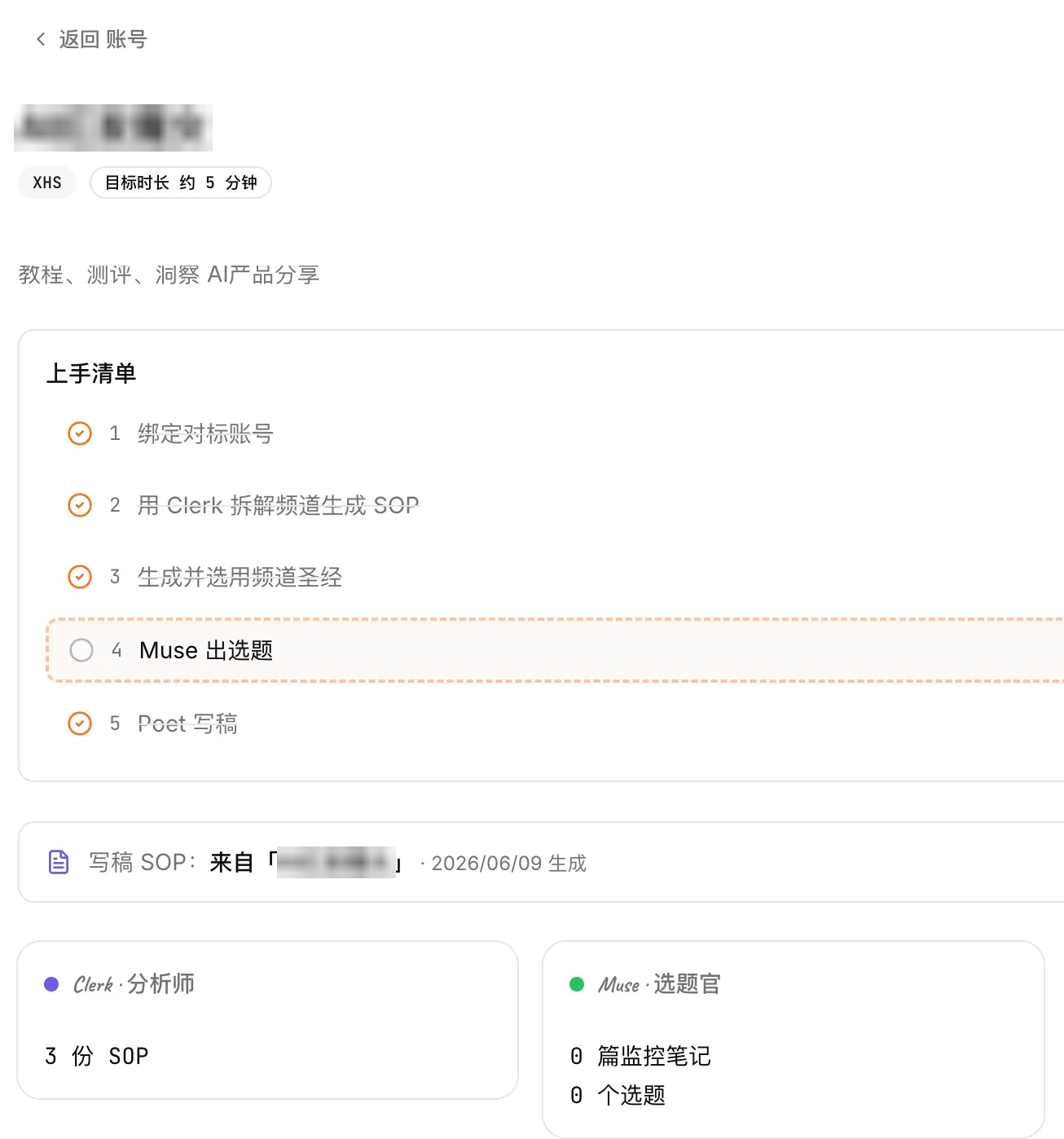
  2. 02We deployed three collaborating AI agents: Clerk performs frame-level breakdowns of benchmark videos and distils reusable SOPs, Muse builds the topic matrix from them, and Poet outputs persona-aligned scripts in seconds — closing the loop from analysis to creation.
  3. 03We provided a dual-track system pairing an automated pipeline for high-volume routine output with a custom creative mode for bespoke pieces, balancing throughput against quality.

Technology

Frame-level video analysis · structured markdown prompts · persona alignment · automated pipeline + custom creation

Sheet masks laid out in a grid, like an account network

Outcome

10×

core-workflow efficiency (persona setup: 20 days → 2 days)

+300–400%

video output (1–2 per day → 4–8 per day)

+67%

account-matrix monthly revenue (3M → 5M RMB)

↓60–80%

cost per quality content piece

“Topics, breakdowns and scripts now run as one line — and the account network went from 3M to 5M RMB a month.”
— Head of operations, a leading medical-aesthetics MCN

Workflow deep-dive

Three linked agents, one content pipeline

The three most labour-heavy steps in making one piece of content: hunting hits, dissecting structure, writing the script. We split them into three agents that each own a step and auto-feed the next — but the real design isn't the automation. It's teaching the machine what good looks like before letting it produce, and keeping judgment in human hands.

The ask

“Help us write scripts with AI — as fast as possible.”

What we saw

Throughput wasn't the disease. Hits weren't repeatable because the why behind them lived only in a few people's instincts — turn the method into an asset first, and speed follows.

The pipeline

  1. Benchmark in
  2. 01Deconstruct
  3. 02Ideate
  4. Human pick
  5. 03Write
  6. Ready-to-use content

The only human step in the whole pipeline sits between ② and ③: the operator ticks the topics worth making from ~100 candidates — human-led, AI-assisted.

01 · Clerk

Deconstruct

Frame-by-frame teardown of a benchmark account and its single most-viral post into a reusable viral SOP.

Input
A benchmark account + its top post (Xiaohongshu export / a YouTube link)
Output
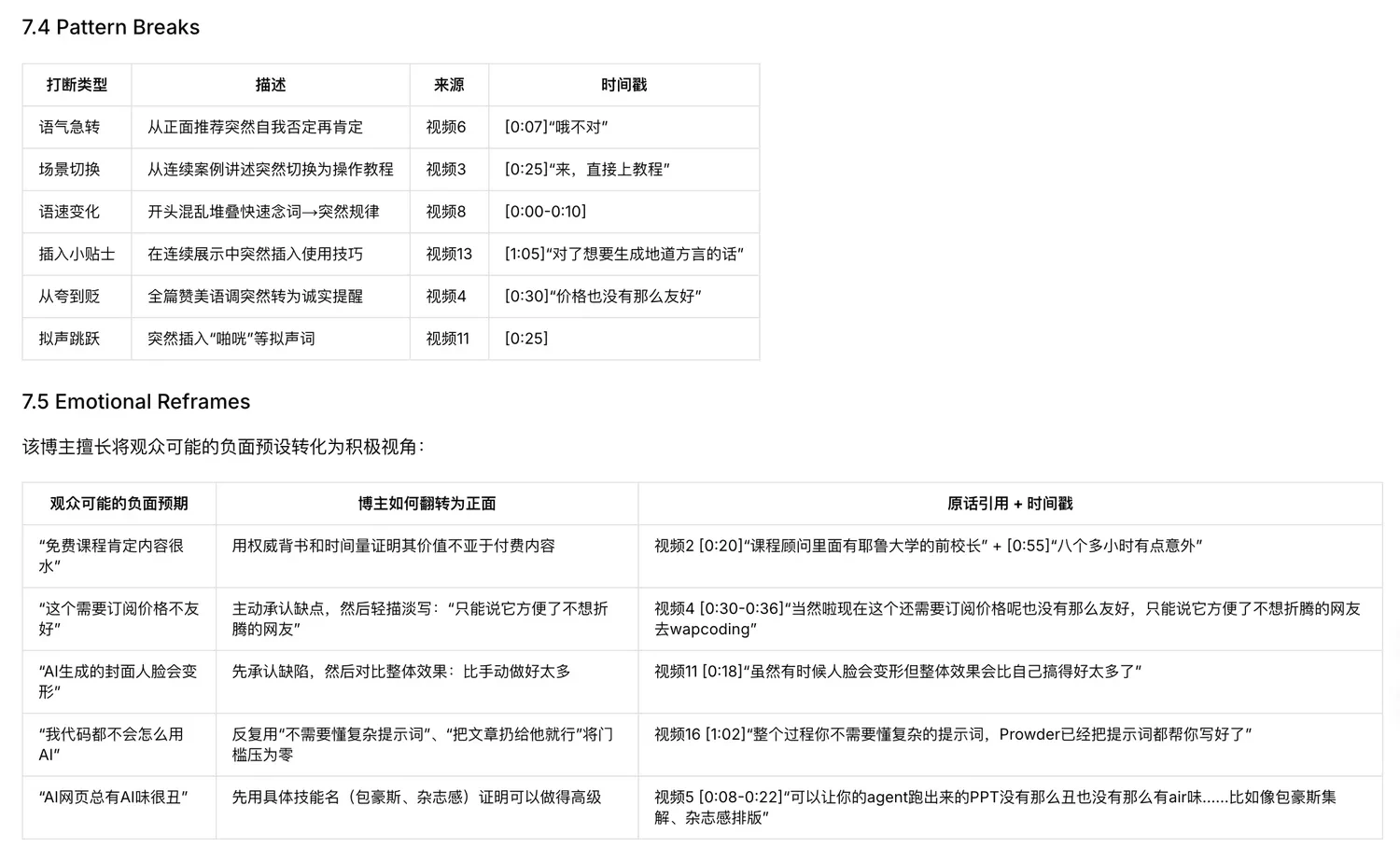
A 7-part teardown — viral formula, themes, hooks, narrative frame, retention tactics, cover, reusable template — plus two SOPs at once (one for humans, one for the AI).
What it removes
Manual benchmark research used to run to a month; deconstructing one post by hand took a full day.
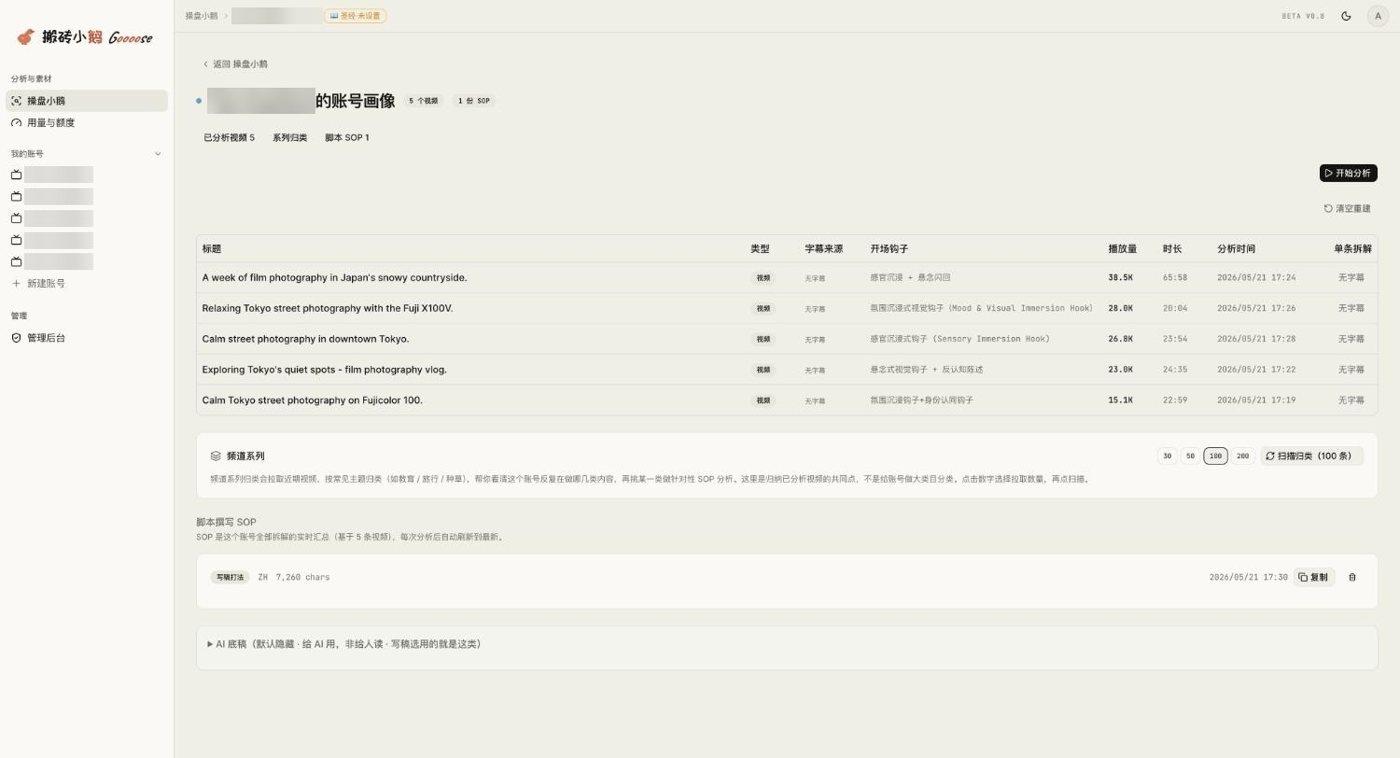
In progress — a single post, frame by frame
Result — the structured teardown SOP

02 · Muse

Ideate

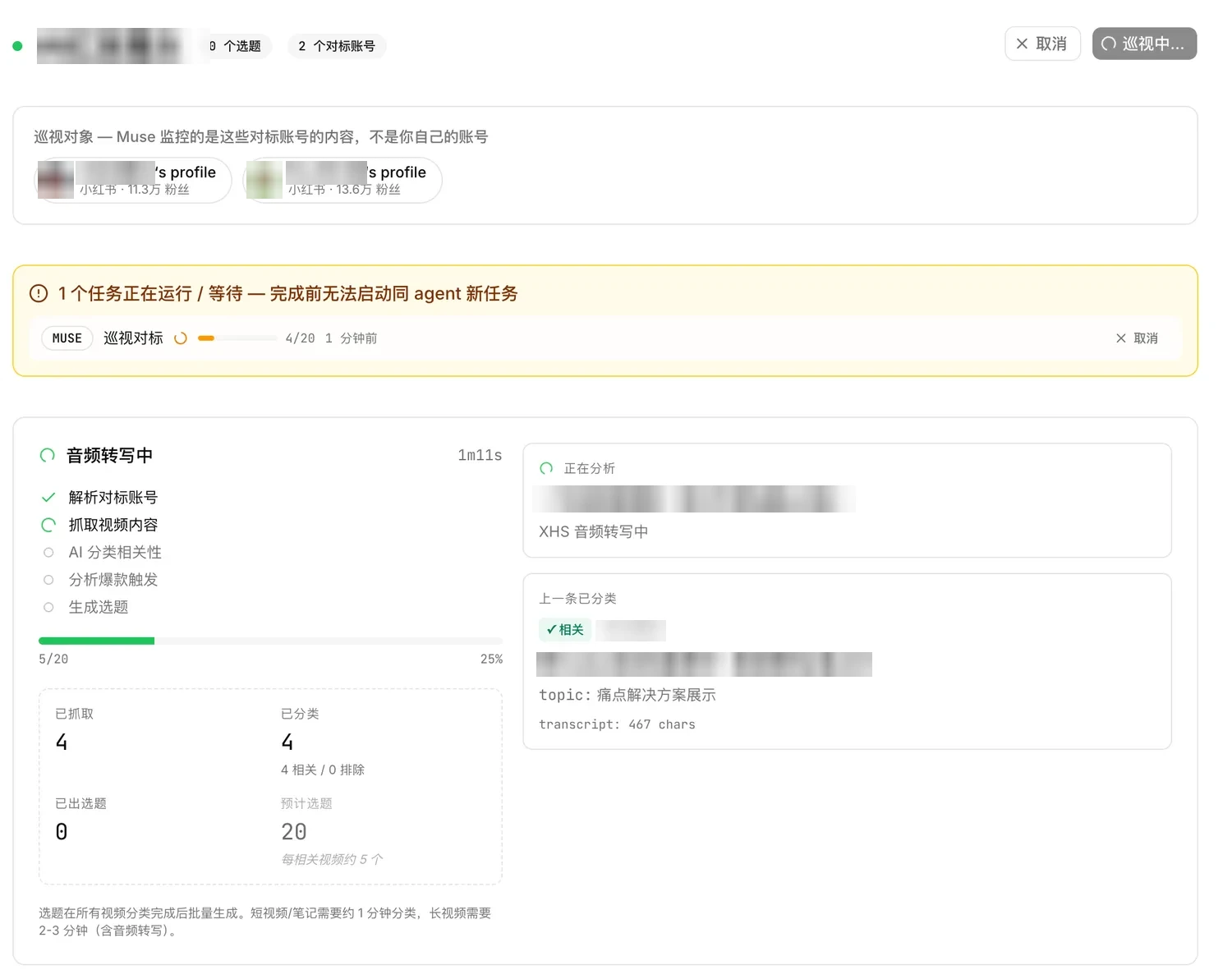
Reads Agent ①'s machine SOP, scans competitors' daily hits, and reverse-engineers topic ideas that convert just as well — not copies.

Input
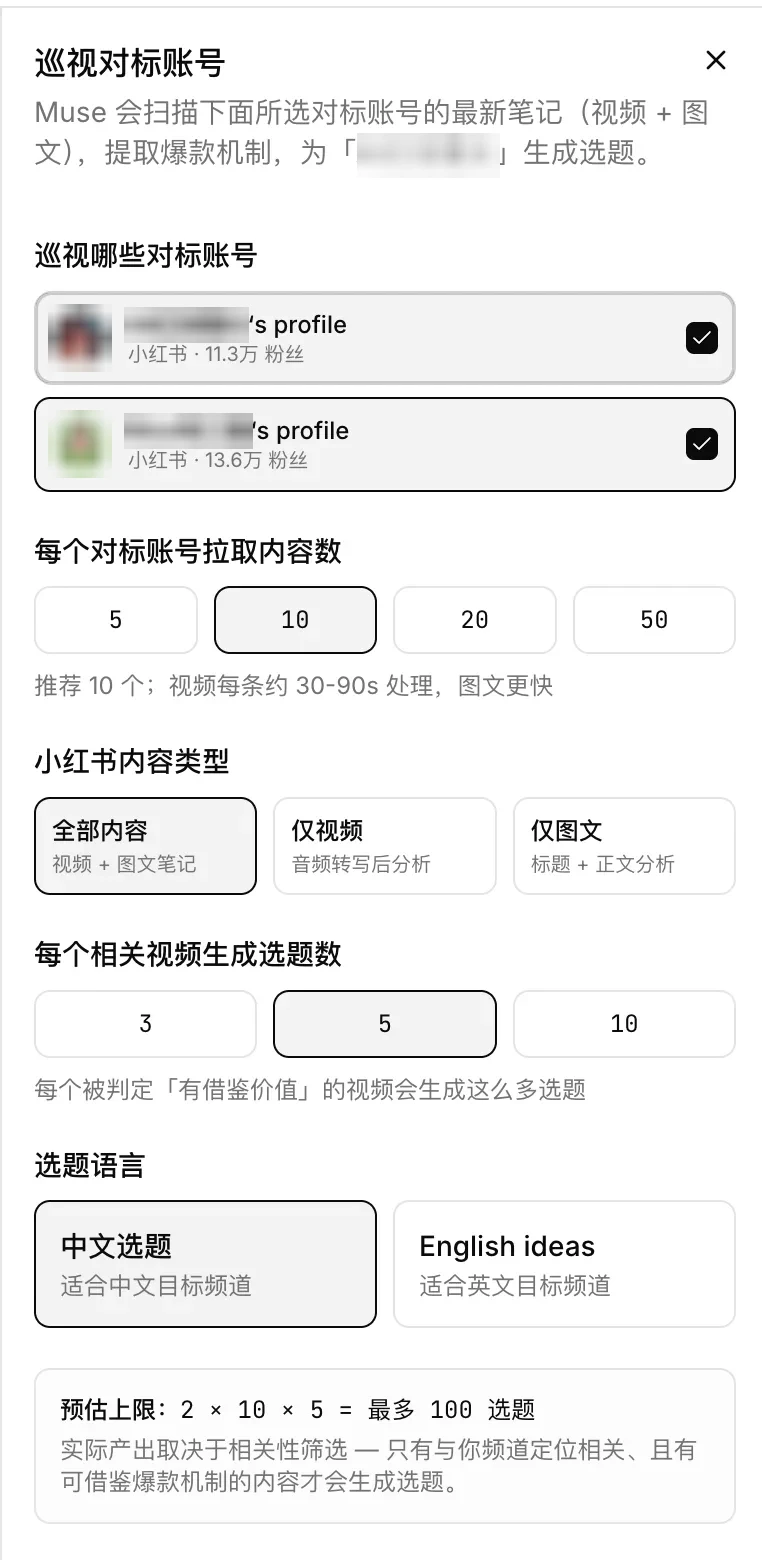
A list of competitor accounts (e.g. 2 × 10 = 20 posts) + Agent ①'s machine SOP
Output
For each source: why it went viral, why it fits you, 5 ideas, and data backing — around 100 candidate topics.
What it removes
Hunting topics on-platform took hours; now you jump off-platform and finish picking in ~30 minutes.
The in-account pipeline: deconstruct → ideate → write

03 · Poet

Write

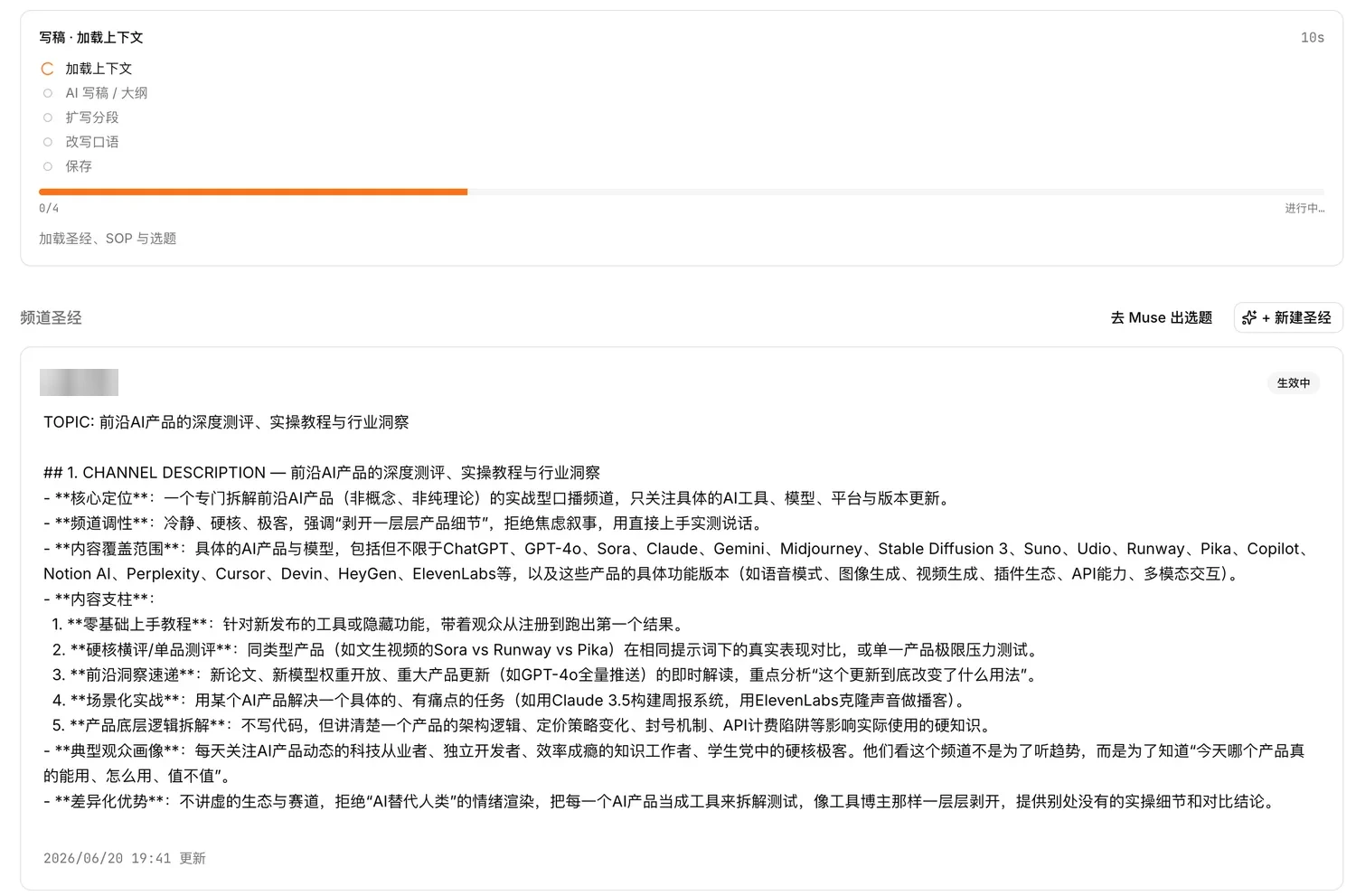
Turns the selected topics into on-persona, ready-to-use voiceover scripts.

Input
The human-picked topics + the viral framework embedded by Agent ①
Output
A finished script — hook → points 1/2/3 → call-to-action — needing only a light length tweak.
What it removes
Scripts straight from generic AI were unusable — you can't dictate a full SOP by hand.
Writing — after loading the channel bible & topics

The key insight

An SOP written for the AI

Agent ① emits two SOPs at once: one for people, one written for the AI. A model reads structured 'machine language' far better than polished human prose — that machine SOP is auto-fed to Agent ②, and it's exactly why the downstream output stays on-persona and usable.

Pick benchmarks — the system projects up to 100 topics
A single post, analysed for ideas

Side by side

Left, the benchmark account's viral original. Right, the piece our pipeline wrote for the client's account after taking that original apart.

Benchmark viral original
Our workflow replica

Next case

AVM, L.P.